Tuesday, March 31, 2009

Harlow Cuadra has Left the Building...

Convicted murder Harlow Cuadra has officially left Luzerne County, and will now be residing at SCI Camp Hill, which is just across the river from Harrisburg, PA. Here... Harlow will spend the next four to six weeks undergoing the standard diagnostic and classification process, where he'll be tested for mental, physical, and emotional problems so he can receive a correctional plan (more about the procedure can be found here).

SCI Camp Hill

Once the diagnostic process is completed, Harlow will be given a classification level, and only then will a determination be made as to which SCI facility he'll carry out his double-life sentence. If I had to guess... it'll be either SCI Greene, SCI Graterford, or SCI Frackville... all maximum-security prisons.

Harlow's inmate number should be known by tomorrow morning, and I'll post it as soon as it's made available.

Update @ 04/01/2009: Harlow Cuadra's Inmate Number: HZ1869

Saturday, March 28, 2009

A Trip of a Lifetime (x2)...

On March 16, 2009, Harlow Cuadra was sentenced to two life sentences without parole for the brutal slaying of Bryan Kocis. Judge Peter Paul Olszewski, Jr., ordered that Harlow be sent to an SCI (State Correctional Institution) within 10 days of his sentence (but he wasn't) ... though from the words of a 'source':

'Just because the judge orders a transfer within so many days does not mean it necessarily happens that quickly. There's a lot of paperwork that has to be updated, and commitment forms need to be created. In addition... the jail transfers inmates twice a week, and they can only take so many at a time... so if there were a lot of SCI sentences in one particular week... they get backed up.'

Harlow Cuadra will be going to SCI Camp Hill on Tuesday... it's also my hope that we'll have a prison number for him on that day too... I'll report it accordingly.

Thursday, March 26, 2009

The Appeals Process

Now that Harlow Cuadra's been found guilty of first-degree murder, and sentenced to serve the rest of his life in prison, he's faced with two choices. Cuadra can either accept his fate, or try his luck at getting a reduced charge/sentence, new trial, or acquittal by filing an appeal. If Harlow chooses to file an appeal, here's the steps that must be taken:

Rule 720. Post-Sentencing Procedures; Appeal.

(A) TIMING.

(1) Except as provided in paragraphs (C) and (D), a written post-sentence motion shall be filed no later than 10 days after imposition of sentence.

(2) If the defendant files a timely post-sentence motion, the notice of appeal shall be filed:

(a) within 30 days of the entry of the order deciding the motion;

(b) within 30 days of the entry of the order denying the motion by operation of law in cases in which the judge fails to decide the motion; or

(c) within 30 days of the entry of the order memorializing the withdrawal in cases in which the defendant withdraws the motion.

(3) If the defendant does not file a timely post-sentence motion, the defendant’s notice of appeal shall be filed within 30 days of imposition of sentence, except as provided in paragraph (A)(4).

(4) If the Commonwealth files a timely motion to modify sentence pursuant to Rule 721, the defendant’s notice of appeal shall be filed within 30 days of the entry of the order disposing of the Commonwealth’s motion.

(B) OPTIONAL POST-SENTENCE MOTION.

(1) Generally.

(a) The defendant in a court case shall have the right to make a post-sentence motion. All requests for relief from the trial court shall be stated with specificity and particularity, and shall be consolidated in the post-sentence motion, which may include:

(i) a motion challenging the validity of a plea of guilty or nolo contendere, or the denial of a motion to withdraw a plea of guilty or nolo contendere;

(ii) a motion for judgment of acquittal;

(iii) a motion in arrest of judgment;

(iv) a motion for a new trial; and/or

(v) a motion to modify sentence.

(b) The defendant may file a supplemental post-sentence motion in the judge’s discretion as long as the decision on the supplemental motion can be made in compliance with the time limits of paragraph (B)(3).

(c) Issues raised before or during trial shall be deemed preserved for appeal whether or not the defendant elects to file a post-sentence motion on those issues.

(2) Trial Court Action.

(a) Briefing Schedule

Within 10 days after a post-sentence motion is filed, if the judge determines that briefs or memoranda of law are required for a resolution of the motion, the judge shall schedule a date certain for the submission of briefs or memoranda of law by the defendant and the Commonwealth.

(b) Hearing; Argument

The judge shall also determine whether a hearing or argument on the motion is required, and if so, shall schedule a date or dates certain for one or both.

(c) Transcript

If the grounds asserted in the post-sentence motion do not require a transcript, neither the briefs nor hearing nor argument on the post-sentence motion shall be delayed for transcript preparation.

(3) Time Limits for Decision on Motion.

The judge shall not vacate sentence pending decision on the post-sentence motion, but shall decide the motion as provided in this paragraph.

(a) Except as provided in paragraph (B)(3)(b), the judge shall decide the post-sentence motion, including any supplemental motion, within 120days of the filing of the motion. If the judge fails to decide the motion within 120 days, or to grant an extension as provided in paragraph (B)(3)(b), the motion shall be deemed denied by operation of law.

(b) Upon motion of the defendant within the 120-day disposition period, for good cause shown, the judge may grant one 30-day extension for decision on the motion. If the judge fails to decide the motion within the 30-day extension period, the motion shall be deemed denied by operation of law.

(c) When a post-sentence motion is denied by operation of law, the clerk of courts shall forthwith enter an order on behalf of the court, and, as provided in Rule 114, forthwith shall serve a copy of the order on the attorney for the Commonwealth, the defendant’s attorney, or the defendant if unrepresented, that the post-sentence motion is deemed denied. This order is not subject to reconsideration.

(d) If the judge denies the post-sentence motion, the judge promptly shall issue an order and the order shall be filed and served as provided in Rule 114.

(e) If the defendant withdraws a post-sentence motion, the judge promptly shall issue an order memorializing the withdrawal, and the order shall be filed and served as provided in Rule 114.

(4) Contents of Order.

An order denying a post-sentence motion, whether issued by the judge pursuant to paragraph (B)(3)(d) or entered by the clerk of courts pursuant to paragraph (B)(3)(c), or an order issued following a defendant’s withdrawal of the post-sentence motion, shall include notice to the defendant of the following:

(a) the right to appeal and the time limits within which the appeal must be filed;

(b) the right to assistance of counsel in the preparation of the appeal;

(c) the rights, if the defendant is indigent, to appeal in forma pauperis and to proceed with assigned counsel as provided in Rule 122; and

(d) the qualified right to bail under Rule 521(B).

(C) AFTER-DISCOVERED EVIDENCE.

A post-sentence motion for a new trial on the ground of after-discovered evidence must be filed in writing promptly after such discovery.

(D) SUMMARY CASE APPEALS.

There shall be no post-sentence motion in summary case appeals following a trial de novo in the court of common pleas. The imposition of sentence immediately following a determination of guilt at the conclusion of the trial de novo shall constitute a final order for purposes of appeal.

Source: The Pennsylvania Code

Wednesday, March 25, 2009

Harlow gets his Court Bill

When Harlow Cuadra was found guilty on March 12, 2009 of first-degree murder, a jury later sentenced him to two life terms in prison without parole. On Monday, Judge Peter Paul Olszewski, Jr. ordered Harlow to pay $2766.08 in funeral costs to the estate of Bryan Kocis, and $250 for the homeowner’s insurance deductible. Harlow was also ordered to pay court costs, which at the time was unknown. Well that bill just came in this morning, and it totals $746.25:

Witness Fees (Luzerne) $24.25
State Court Cost (Act 204 of 1976) $11.50
Commonwealth Cost - HB627 (Act 167 of 1992) $17.30
County Court Costs (Act 204 of 1976) $25.20
Crime Victims Compensation (Act 96 of 1984) $35.00
Domestic Violence Compensation (Act 44 of 1988) $10.00
Victim Witness Services (Act 111 of 1998) $25.00
Firearm Education and Training Fund (158 of 1994) $5.00
JCP $8.00
ATJ $2.00
DNA Fund Cost $250.00
Clerk of Court Filing Fee (Luzerne) $120.00
Automation Fee (LCAP) (Luzerne) $5.00
LC Cost Additional Count (Luzerne) $26.00
Costs/Fees Totals: $746.25
Grand Totals: $746.25

Monday, March 23, 2009

Brief Update...

1. Judge PPO has granted a prosecution request that Harlow Cuadra pay restitution for funeral expenses related to the death of Bryan Kocis... I'm fairly certain it'll be equal to the $2766.08 that Joe has already been ordered to pay.

2. 14 orders have been unsealed for Joseph Kerekes... but as of this post, none of the sealed orders filed by the DA's office have been unsealed... so it looks like we'll have to wait.

... more later.

Update @ 6:22 PM: Sources now tell me that PPO ordered that Cuadra pay $3,016.08 in restitution to Kocis' estate for funeral and estate expenses. The order also says that Joseph D'Andrea [Harlow's attorney] was in agreement with this figure.

Update @ 7:13 PM: I'm told that some of Joesph Kerekes' unsealed documents revealed that there was also some mention of him writing unsolicited letters to Demitrius Fannick. Fannick wanted that to stop.... he was not council of record...and Joe said that all Fannick ever wanted was money. PPO cautioned everyone, and spelled it out loud and clear for Joseph Kerekes that he needed to stop all the BS.

Update @ 9:50 PM: There was also a transcript of proceedings that were held behind closed doors with Joseph Kerekes and his attorneys Bufalino, Centini , etc... the hearing was because Bufalino wanted to make PPO aware that Joseph Kerekes was not following their advice, and is becoming his own worst enemy by communicating with both Renee Martin and Harlow Cuadra. His defense was that he needs to communicate with Renee Martin because she is his support financially, and his parents couldn't support him that way.

Update @ 03/25/2009: The Times Leader is reporting that Joseph Kerekes did a lot of talking and writing, so much that his lawyers raised concerns about it to a Luzerne County judge behind closed doors.

A transcript of the closed-door court hearing held Feb. 20, 2008, was one of several sealed court records in the Bryan Kocis’ homicide case that were opened to the public late Monday afternoon.

Attorneys Mark Bufalino, John Pike and Shelley Centini requested a closed hearing with Judge Peter Paul Olszewski Jr. in February 2008 to express concerns their client, Kerekes, was writing letters to Renee Martin, of Texas, and attorney Demetrius Fannick about defense strategy. At the time, Kerekes and Cuadra were facing the homicide charges.

The judge, the three attorneys, Kerekes, Olszewski’s law clerk, a court reporter and several sheriff deputies were the only people in the courtroom that was closed to the public and prosecutors.

According to the transcript of the hearing, Kerekes’ attorneys said they were in an awkward position and felt useless in defending Kerekes because they felt he was releasing confidential information. Pike told the judge that Kerekes had ignored their advice to keep quiet.

“There has been multiple third-party communications by our client with people involved and not involved with this case despite our significant warnings,” Pike said. “It has come to our attention that some of this information may have come into the hands of the District Attorney’s Office. …”

Authorities obtained the letters Kerekes had written to Martin, who formerly resided near Kerekes and Cuadra in Virginia Beach, Va. Kerekes also wrote a letter to Fannick, who, in turn, gave it to Pike.

“Attorney Fannick forwarded me a letter that he got from our client with the request that I inform our client not to communicate with him anymore, that (Fannick) is not his counsel,” Pike told Olszewski.

Fannick had met with Kerekes at least eight times at the Luzerne County prison, prior to Fannick’s brief representation of Cuadra. Fannick was eventually disqualified in March 2008 from representing Cuadra.

Olszewski warned Kerekes that releasing information protected by the attorney-client privilege would jeopardize his defense. Kerekes responded, according to the transcript, that he understood Olszewski’s warnings.

So What Happens to Harlow Cuadra Now?

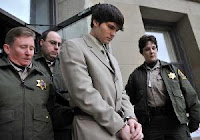
Harlow Cuadra

Now that Harlow Cuadra has been found guilty of first-degree murder for the brutal slaying of Bryan Kocis, he'll be spending the rest of his natural life (x2) behind bars. So what's he got to look forward to... well... within the next few days... the same thing his partner in crime Joseph Kerekes has already been experiencing:

WHAT HAPPENS WHEN A PERSON IS INCARCERATED IN A PENNSYLVANIA STATE PRISON?

When an inmate enters into the Department, the diagnostic and classification process begins. This means that the inmate is tested for mental, physical, and emotional problems so that he can receive a correctional plan. It also shows the inmate’s strengths, such as his education, skills, and emotional stability.

A male inmate coming into the Department will go through the State Correctional Facility at either Graterford, Pittsburgh, or Camp Hill; however, every man is classified at the Diagnostic and Classification Center in Camp Hill. The whole diagnostic and classification process takes about four to six weeks. A newly committed inmate is separated from the general population inmates during this time.

When an inmate first arrives into the Diagnostic and Classification Center the Reception staff does the following:

• looks over the identification of the new inmate,
• makes sure all the paperwork is in order, and
• calculates what the inmate's sentence should be, based on the length of the sentence, how much time the inmate has already served and other factors.

The inmate is searched to make sure that no contraband is being brought into the facility. He is photographed and fingerprinted. The inmate will also get special clothing that identifies him from a general population inmate as a new, unclassified inmate.

The inmate is assigned a corrections counselor and is given his first cell assignment. He will also get an Inmate Handbook which explains the rules about inmate behavior, inmate grooming, telephone calls and religious programs.

Many tests are performed before putting the inmate in population with other inmates. The initial medical screening rules out obvious medical problems, emotional problems, and TB. The staff also give tests that tell if the inmate has a mental illness. The inmate takes IQ tests and tests that measure educational achievement. A new inmate will also take a test that tells if he has a problem with drugs or alcohol and how serious the problem is.

The inmate is also interviewed by other treatment professionals. Interviews by corrections counselors, psychologists, drug and alcohol treatment specialists, chaplains, educators, and medical staff help to decide what treatment or education the inmate needs and how closely he needs to be supervised. An inmate covered by the DNA Detection of Sexual and Violent Offenders Act are required to have a blood sample taken, which is sent to the Pennsylvania State Police (PSP).

CLASSIFICATION AND CUSTODY LEVEL

After all the tests and interviews are completed, the inmate is assigned a custody level. The custody level determines the amount of security needed to manage the inmate. In addition, a Needs Assessment is completed which tells the prison staff what needs the inmate’s needs are in treatment and education.

The find out what needs the inmate has and to determine what custody level is right for him, the Pennsylvania Additive Classification Tool (PACT) is used. The PACT is a series of questions, and each question’s answer has a score that when added together given a total that tells what custody level is recommended for that inmate.

The inmate may be assigned a custody level of 2, 3, or 4. Custody level 2 means that the inmate is suitable for a minimum security facility. Custody level 3 is medium security and custody level 4 is close security. There are special situations where the inmate may need less security or much more security than is available in these 3 levels.

Custody level I is only used for an inmate being placed into a Community Corrections Center. Custody level 5 is used for an inmate who needs maximum security and is placed in the Restricted Housing Unit (RHU), Special Management Unit (SMU), and Long-Term Segregation Unit (LTSU). If the inmate needs to be in one of these custody levels, the corrections counselor will request what is called a classification override. If the Department’s Central Office agrees that it is justified, the inmate will receive the special custody level.

When all of this is completed, a Classification Summary is developed for use by the staff at the facility in working with the inmate. The summary includes the following information: a photo, description of what the inmate looks like, problem areas, an official version and an inmate version of the crime, criminal history, how the inmate functioned during his time in prison, education and work history, social history, medical information, the inmate’s sentence, custody level and needs assessment information.

The Classification Summary makes sure that the prison staff has a complete picture of the individual inmate. This is important in order for the inmate to get the most benefit from his time spent in prison and helps the classification counselor know what the inmate needs as far as treatment and education.

When the Classification Summary is complete, the facility staff meet and decide which facility best meets the educational, treatment, and security needs of the inmate. One factor that is considered is whether the inmate has enemies in a facility who may wish to harm him so that the inmate can be kept safely away from them. The facts of the report of enemies must be verified. Another factor that decides placement is where space is available at that time.

The inmate’s custody level is reviewed with him every year of his sentence. If the inmate maintains proper behavior, works and actively participates in recommended programs, he will generally be assigned to the less restrictive housing. If the inmate achieves custody level 2 for 12 months and is within two years of parole review, he can apply to the Unit Management Team in his facility for consideration for a promotional transfer to his home region. A life sentenced inmate in custody level 2 and 3, who completed ten years of his sentence and meets the criteria may apply for promotional transfer to his home region. The inmate must comply with promotional level 2 criteria to apply for a hardship transfer.

Source: Prison Handbook for Families and Friends

Saturday, March 21, 2009

Interview: One Juror's Thoughts...

Last night, I was fortunate enough to spend a few hours interviewing one of the juror's of Harlow Cuadra's murder trial... while I'm not going to post the entire interview online, I'll offer a few interesting quotes/observations:

'Harlow's mother was annoying.'

Found it odd that 'Harlow's mother couldn't speak English on the stand, but had no problem doing so in front of the cameras.'

After the trial the juror heard from a source that 'Joe's lawyer had him call his mother before taking the stand to testify for Harlow'.

After the trial the juror heard from a source that 'one of Harlow's attorney's apparently asked the prosecution for a deal: 3rd degree/30 years... and thought the DA's office wanted the trial for publicity'.

'Harlow was really crying while on the stand (for a while) but you could tell it was an act... then he started yelling. He was erratic... one minute he goes in to the porn thing, then changes to a completely different subject. He yelled at Melnick several times.'

'Harlow would say Joseph... then Joe when he was mad.'

Thinks Harlow was the killer... 'houses too close for a gun'. 'Joe does most of the looting while Harlow cleans up'.

'Harlow and Joe's debt was never brought up'

'Nep admitted to having sex with Joe... we wondered if they had to flip a coin... meanwhile Matthew Brannon said he had a 3-some with Joe and Harlow.'

More interviews to come...

Over 112k Spent to Convict Cuadra and Kerekes

According to the Times Leader, Luzerne County prosecutors spent more than $112,317 to put Harlow Cuadra and Joseph Kerekes away for life.

It was a very expensive prosecution,” District Attorney Jacqueline Musto Carroll said. “We have to do these cases just right because we have the burden of proof. With that being said, we kept the cost as manageable as possible.”

The two Virginia Beach, Va., men were accused in the killing of Bryan Kocis in Dallas Township in January 2007. Cuadra, 27, was convicted by a jury on March 12 of first-degree murder and was sentenced to life in prison with no chance for parole. Kerekes, 35, pleaded guilty in December to second-degree murder and is serving life in prison.

Musto Carroll said prosecution costs included transportation, lodging and meal expenses for witnesses residing outside Pennsylvania, in addition to a number of exhibits presented to the jury during Cuadra’s trial.

“Antonia Ardo and our chief detective, Michael Dessoye, did a phenomenal job in lining up witnesses and taking care of travel arrangements,” Musto Carroll said. “That alone was a great undertaking.”

Ardo is the office administrator for Musto Carroll.

Several witnesses after they were finished testifying were immediately transported from the courthouse to the Wilkes-Barre/Scranton International Airport. From there, they either flew directly home or were flown to Philadelphia International Airport to catch another flight.

“When (assistant district attorney) Michael Melnick would tell me what he needed, he was given what he needed to do the job right,” Musto Carroll said. “I don’t think this case was harmed in any way by us not doing a certain test or calling experts that were needed. In a fiscally responsible way, we let our experts know that we don’t have money to burn.”

County commissioners gave the district attorney’s office more money in 2009 to help off-set the high cost to prosecute capital murder cases and consult experts.

According to the 2009 budget for the district attorney’s office, $100,000 is set aside for capital cases and $350,000 is set aside for examinations/witnesses. By comparison, there was no money for capital cases and $179,800 for examinations/witnesses for the district attorney’s office in 2008.

“(Commissioners) responded to us in our time of need and thankfully, we’re able to afford this case,” Musto Carroll said. ‘But we have to watch every penny because it’s only March.”
---

Meanwhile, in another Times Leader article... Luzerne County taxpayers have so far paid more than $25,320 to defend two Virginia men for the killing of Bryan Kocis in Dallas Township in January 2007, according to unsealed court records.

A detective agency was paid more than three times than what was initially allocated by a Luzerne County judge for investigative work in the capital murder case of Harlow Cuadra.

The Jesse Detective Agency of Dallas was paid $4,497.50 by the county controller’s office in early January, $3,497 more than the $1,000 approved by Judge Peter Paul Olszewski Jr. in July, according to court records unsealed late Thursday afternoon.

Cuadra’s former attorneys, Stephen Menn and Michael Senape, requested to hire a detective agency to “interview defense witnesses and conduct general investigations,” as part of their defense.

Olszewski approved the request, allowing Menn and Senape to hire the Jesse Detective Agency at an hourly rate of $50 per hour for a total amount not to exceed $1,000, court records say.

Olszewski on Friday said it’s common for detective agencies to be court-appointed upon request to assist conflict lawyers defending capital murder cases.

Olszewski said he approved the much higher payment because capital murder cases require more investigative work than non-capital cases. He approved the payment only after he reviewed the detective agency’s bill, Olszewski said.

The Jesse Detective Agency submitted a bill for 75 hours of work and 1,495 miles driven at $.50 cents per mile

“The Jesse Detective Agency is always fair and reasonable with their costs,” Olszewski said. “I found it reasonable considering it was a capital murder case.”

Cuadra, 27, was convicted by a jury on March 12 in the brutal killing of Bryan Kocis, 44, in Dallas Township in January 2007. Cuadra was sentenced on Monday to life in prison without any chance for parole. A co-defendant in the case, Joseph Kerekes, 35, pleaded guilty in December and is serving a life sentence.

Menn and Senape were permitted by Olszewski to withdraw from Cuadra’s case in December.

A payment of $7,546.20 was authorized in December to Court Consultation Services, of New York, for mitigation work on Cuadra’s behalf.

CCS Director Louise Luck testified during the penalty phase of Cuadra’s trial. She researched Cuadra’s history by interviewing relatives and employers.

Olszewski further approved payment not to exceed $3,000 to Dr. Richard Bohn Krueger, hired to conduct a psychiatric evaluation of Cuadra. Krueger didn’t testify during Cuadra’s trial.

The three payments are the latest court orders that were unsealed.

Olszewski had previously approved more than $10,280 in payments for Kerekes’ defense.