Showing posts with label Law 101. Show all posts

Sunday, December 16, 2007

Harlow & Joe's Trial Preparation

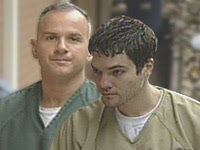
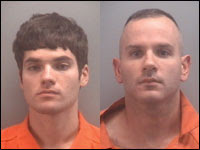
Harlow Cuadra and Joseph Kerekes

As was evident with the recent trip to Luzerne County last week by Sean Lockhart and Grant Roy... attorneys for the Pennsylvania DA, as well as counsel for Harlow Cuadra and Joseph Kerekes are all most certainly in 'preparation mode' for the upcoming trial.

What is the preparation process you might ask... it's obtaining the materials needed during the course of the investigation including; discovery, depositions, medical records, and more:

"The problem of assimilating all of this information and preparing for trial is like carving a statue out of a block of solid granite. A famous artist once said, "The statue was always there - all I did was remove the excess granite. " But trial preparation is not so simple because the raw material may not be there and it may be necessary to take additional depositions, conduct further investigation or serve additional written discovery. For this reason, serious trial preparation should take place at least six months before trial."

Here's a great link that breaks-down the entire suggested process:
http://library.findlaw.com/1999/Oct/1/129464.html

It should also be noted that this is a fairly generic process... it may not be the exact way the Bryan Kocis murder case is being handled. However, it will give you a good idea as to the things that are commonly done, and thus-far being followed-up by certain attorneys.

Wednesday, December 5, 2007

The Witness Round Up

Harlow and Joe

Both Harlow Cuadra and Joseph Kerekes' attorneys have requested more time before trial, with one reason being that they need to speak with witnesses that are scattered around the globe.

I wanted to clarify a few things in regards to this, so that folks don't think there's something odd going on.

The way the system works is that these witnesses, whether they are for the guilt phase or penalty phase, need to be rounded up and interviewed before the start of trial. It goes to the rules of discovery. Both parties need to know what the witnesses would say if called to testify.

The penatly phase, if necessary, would start IMMEDIATELY after the guilt phase. It's not like the attorneys get to ask the judge for more time to track down the witnesses after a verdict.

That's why they need to be rounded up before trial; not because the attorneys think their clients will be guilty.

From what I've been told, it's been done that way in every capital murder case in Luzerne County for the past 9 years. Even those that never reached the penalty phase.

Rounding up these witnesses now has absolutely nothing to do with any confidence on the guilt phase.

Friday, November 23, 2007

Crossing Your T's and Dotting Your I's

Harlow and Joe

With previous motions being filed by the prosecution and defense requesting that Harlow Caudra and Joseph Kerekes be assigned conflict attorneys and not public defenders (Joe already won his motion)... some folks may be wondering what the heck is going on. In my hopes of making this a little more clear, I'll try to explain:

Attorneys Al Flora and Jonathan Blum previously represented Bryan Kocis, and might be called to testify at the Cuadra/Kerekes trial. The main concern here is that Flora and Blum had involvement in a previous Kocis case, and since Flora's the the second-in-command at the PD's office... there's no telling what influence his inside information may have on those under him. (Blum has since been removed from the case).

We also need to keep in mind that if there is a conviction for either defendant, it can certainly be overturned on appeal if an appellate court believes that Harlow Cuadra and/or Joseph Kerekes was not defended properly or legally. So it's understandable why both sides would want to address this issue now. There was also a situation very similar to this one that came up in a past death penalty case. It ended up being appealed before trial, and caused a long delay before the trial could even start.

The argument here isn't about the specific public defenders assigned to the case, but the fact that they are involved at all... especially since their boss (Flora) could potentially be called as a witness.

This is one of those rare events that both the prosecution and defense agree on the same outcome desired... so it'll be interesting to see what happens. I'm guessing this motion will likely go to Judge Olszewski to decide.

Tuesday, November 6, 2007

The Plea: Interview With a Judge

While we wait to see if Harlow Cuadra and/or Joseph Kerekes choose to make a deal with the Luzerne County District Attorney's office, I thought I'd post a link to an interesting interview done by PBS with a criminal court judge in Harris County (Houston), Texas.

In the interview, he talks about the plea bargain's vital role in the criminal justice system and how the plea process works in his courtroom, and he describes his own role as a judge. While he defends pleas, he acknowledges that the vital "human element" is required to guarantee that the system works correctly: "Plea bargaining only works if you have experienced, competent defense attorneys, experienced, competent prosecutors, and a judge who will make sure this is done properly."

While this clearly isn't a judge from Luzerne County, it does give some interesting insight to how I'm sure most judges probably feel towards a defendent accepting a plea:

Saturday, November 3, 2007

Why Plea Bargain?

With the current rumors floating around that Harlow Cuadra may accept a plea bargain from the Pennsylvania DA's office... I thought it would be interesting to re-post a story written by KM on August 9, 2007:

"What are the chances that before this case is over, either Mr. Cuadra or Mr. Kerekes (or both) will throw in the towel and just plead guilty to the charges? The short answer would be, “mighty high,” if only because that’s what most defendants do.

A video from the Criminal Justice channel has some basic information. But what makes a proper plea bargain? Well, it has two parts: the information and the waiver. Both are required.

First, the client has to know what he’s doing. He has to be represented by counsel, and has to be informed of all the consequences incumbent with his plea.

Next, he has to voluntarily waive certain of his rights. In effect, a plea bargain is like a supercharged version of that Miranda waiver that police try to get bad guys to sign so that they might be questioned. Only in this instance, the defendant is essentially waiving his Fifth Amendment right against self-incrimination in toto.

If proof of one of the two elements is missing, the judge will throw out the plea deal. That’s right, before it’s done, the whole thing has to go before the trial judge to get him or her to sign off. The judge is under no legal compulsion to agree to the deal.

In practice, however, plea agreements are seldom invalidated by the bench. The agreements do get breeched from time to time—usually because prosecutors find out that the defendant lied about something during the course of plea negotiations.

Now, there is also a special sort of guilty plea that pops up very rarely: the Alford plea. That’s a plain, old guilty plea with a twist: the defendant does not admit guilt. In all other ways— in sentencing, as a record of previous bad acts in subsequent trials, as a criminal step toward Habitual Offender status— the Alford plea is just like a standard guilty plea. It's also peculiar and passingly infrequent.

Finally, there’s the plea that uniquely splits the difference between guilty and not guilty: No contest (AKA nolo contendere, among the guys who took Latin in prep school to boost their SAT Verbals.)
A defendant who pleads ‘no contest’ is basically refusing to put up a legal fight. In essence, he gets treated thereafter just as if he had pleaded guilty, except the plea “is in no way an admission of guilt and [differs from an Alford plea in that] it cannot be introduced in future trials as evidence of incorrigibility. Nevertheless, courts do not have to accept a plea of nolo contendere, and usually do not, except in certain nonviolent cases. [*] "

Saturday, October 20, 2007

The Next Hearing (12/21/07)

Harlow Cuadra and Joseph Kerekes

The next hearing is the pre-trial conference ... also known as the scheduling or status conference. Generally what will happen is both Harlow Cuadra & Joseph Kerekes along with their defense lawyers and the assistant district attorney... will appear before Judge Peter Olszewski and the course of disposition will be determined. All other pre-trial matters should also be resolved at the pre-trial conference, including what evidence will be excluded from trial and which witnesses will be allowed to testify.

Harlow and Joe will also be given the opportunity to plead guilty, accept a plea bargain if one is offered, or proceed with a jury or non-jury trial.

Thursday, October 11, 2007

What Happens Next

Harlow Cuadra and Joseph Kerekes

Now that the formal arraignment is over, and with Harlow Cuadra and Joseph Kerekes both pleading not guilty to the brutal murder of Bryan Kocis, the next legal step is the discovery process ... which basically serves as a period of trial preparation for both sides.

With pleas in place, Harlow and Joe's attorneys will now likely file a notice of intent to participate in discovery with the prosecution. That means that the district attorney's office is required to turn over any and all material that is potentially exculpatory.

The prosecutor has an affirmative duty to continue to provide Harlow and Joe with the names and addresses of all relevant witnesses, along with anything about those witnesses that might impeach their credibility-- like past criminal records, for example.

District Attorney

Further, the DA has to turn over that info even on witnesses that he doesn't actually intend to call at trial. The specific claims of anyone who gave exculpatory evidence during the course of the State's investigation have to be brought forward and handed over to the Defense. Additionally, the prosecutor must provide any written or recorded statements that Harlow and Joe provided. In short, if it's at all useful to the Defense, the DA has to cough it up.

As part of the discovery, Harlow and Joe's attorneys are allowed to question the prosecution’s witnesses through the deposition process... a formal inquiry of the witness, who tells his or her story under oath and has it recorded by a court reporter.

From now until the actual trial, the lawyers will also fight over motions that would affect how the case gets presented. Those motions include requests for a bill of particulars, motions for continuance, severance or joinder, evidentiary or testimonial suppression, etc., and begin within thirty days after the formal arraignment.

- Both PC and KM contributed to this story.

Wednesday, October 3, 2007

Formal Arraignment... What To Expect

Harlow and Joe

With the preliminary hearing over, we're now moving to the next stage which is Thursday's formal arraignment. This is where the charges will be formally announced to the court. ( we already know the death penalty is being sought ).

Once the indictment has been read aloud in court, both Harlow Cuadra and Joseph Kerekes will be asked to enter a plea of guilty or not guilty. The only other alternative would be a plea of no contest, which neither admits or denies the facts alleged by the DA, often requires no allocution, and is a plea that cannot be used later as evidence against the defendant in future civil matters-- like if Mr. Kocis' family decided to sue Harlow and Joe. A no contest plea is allowed only at the prosecutors' (and judge's) discretion, and it almost certainly is not one available in this case.

If Harlow and Joe plead not guilty, the court will advise them of their right to counsel. If they're truly indigent and cannot afford counsel ( as their blog has stated ), the court will appoint Public Defenders to represent them.

There's also the remote possibility that one, or both could agree to a plea deal.

Please note that this is simply a brief overview, and that much more will be explained tomorrow after the arraignment.

-PC

Sunday, September 9, 2007

Shall It Be Life, or Death?

Prison Cell
Harlow Cuadra’s and Joe Kerekes’ Formal Arraignment in the Bryan Kocis murder case will largely be just that, a formality.

But at that October 1st hearing, one dreadfully important scrap of information will be imparted: the DA’s office will notify the defendants (and announce to the court) whether or not the State will seek the death penalty.

After the magistrate dropped Burglary and Conspiracy to Commit Burglary charges at last month’s Preliminary Hearing, there was abundant rejoicing in some circles. The hope there was that the death penalty must now be ‘off the table.’

Indeed, removing those charges reduced the number of ‘aggravating factors’ that are taken into legal account in deciding whether or not the accused shall literally be on trial for their lives. But some of the charges that remain on the indictment are aggravating factors themselves... so, we won’t know exactly what the DA has planned for Harlow and Joe until he tells us on the first of next month.

-KM

Wednesday, September 5, 2007

The Pennsylvania Chainsaw Massacre

The best Defense case is almost always the simplest one, and no doubt that’s the one that Harlow Cuadra’s and Joe Kerekes’ lawyers have planned. But the facts in evidence may not cooperate with that scheme.

Texas defense attorney
Mark Bennett sums things up quite succinctly. ‘When you have a criminal case to defend, every piece of evidence will fall into one of three categories:

-Things you contest (“no...”);

-Things you explain (“yes, but...."); and

-Things you accept ("[but...] so what?”).’

In the Kocis case, there are plenty of things the Defense can accept (or will be forced to accept). Here are a few of those:

-The gun shop tape shows what it shows (but, so what?);

-Harlow’s Discover card shows the pair rented that SUV (but, so what?)

-Someone at Joe’s and Harlow’s house sent those early ‘Danny Moulin’ emails from IP addresses assigned to Harlow’s account (but, so what?)

-That background check on Bryan Kocis was purchased online using Harlow’s credit card (but, so what?); and,

-Harlow and Joe were deep in debt (but, again, so what?)

You get the idea.

Now, there does come a point at which letting too much evidence like that go by undisputed has the Defense helping make the circumstantial case against Harlow and Joe. That’s when their attorneys will have to start explaining things. For example:

-
The Black’s Beach tape says what it says (but Harlow and Joe were just talking big... they weren’t serious.)

-Joe did tell a Times Leader reporter that Harlow was at the murder scene (but, at the time, he was just angry about hurtful things said on Harlow’s blog.)

-
Justin Hensley says that Harlow and Joe saw Cobra as their main rival (but there are dozens of similar companies, and none of their head honchos got killed.)

-Grant Roy has all kinds of incriminating things to say about Harlow and Joe (but Roy and Sean Lockhart are obvious suspects themselves.)

...and so on. The arguments may be strong or weak, but they’ll have to be made.

Which brings us to the tough stuff; the accusations that the Defense just has to vociferously contest or flatly deny:

-Authorities say that the camcorders found in Harlow's and Joe's house might have belonged to Kocis... (no, the Defense must say, they're not the same camcorders.)

-The coroner says that the knife Harlow and Joe bought is likely the weapon that killed Kocis... (no, the Defense must say, that knife wasn’t ever out of its packaging.)

-Police say Harlow and Joe went to Kocis’ house to murder him... (no, the Defense is almost forced to argue, they may have been nearby but neither of them were ever in that house.)


Of course, as attorney Bennett also points out, “[e]very contest... [every outright denial] and every explanation, however, complicates your case. Complicating your case is not desirable...."

Bennett calls the concept “Bennett’s Chainsaw,” and it’s a variation on the famous Occam’s Razor idea.

It goes like this: “The more things you must contest and the more explanations you must provide in order to mount a defense, the more likely it is that you will be convicted.”

-Both PC and KM contributed to this story.

Saturday, August 25, 2007

The Next Step

Harlow Cuadra
Magistrate Tupper has decided to send Harlow Cuadra and Joe Kerekes to trial on various charges. In so doing, he’s come to the outer edge of his power in the system: formally indicting the duo and turning jurisdiction of their case over to the court tier that runs felony trials in Pennsylvania, the Court of Common Pleas.

To do that, Tupper has the County Clerk of Courts exchange paperwork with the DA’s office. The DA eventually hands up what’s called an Information, detailing to the higher court the charges agreed upon by the Magistrate at the end of the Preliminary Hearing.

The prosecutor has the discretion to drop some (or all) of the charges at this point, if he finds them unsupportable at trial. He can even add charges, but will have to immediately support those extra charges before the eventual trial judge.

No Grand Jury will be convened. This is a direct indictment.

Joseph Kerekes

The Defense receives the Information; technically, that receipt constitutes the defendants’ Formal Arraignment*. [See correction at the bottom.]

The trial judge will then declare a period of time during which he or she will entertain pre-trial motions: specific Discovery requests, any motions to suppress improperly acquired evidence, requests to sever the two defendants’ cases, etc. That period is usually 30 days, assuming there are no requests for continuance.

Next stop: the Pre-trial Conference... we’ll detail that when it gets closer.


Correction: In Luzerne county, Formal Arraignments are done before a Common Pleas Court Judge. I didn't know that, as the custom varies from county to county.

From a PA lawyerly website: "The next proceeding is the formal arraignment, which may or may not occur before a judge of the court of common pleas. In most counties, no judge is present. The defendant is provided with a copy of the information and advised of his rights, including his rights to file various pretrial pleadings. Generally, the district attorney is not represented at formal arraignment."

-KM

Wednesday, August 15, 2007

The Power of Nolle Prosequi


The day that Harlow Cuadra and Joe Kerekes arrived in Pennsylvania sporting shackles, Luzerne county DA David Lupas told reporters something quizzical. He said that he had not ruled out further arrests in the murder of Bryan Kocis.

The Cuadra/Kerekes partisans seized upon that statement almost as madly as did the anti-Lockhart/Roy forces. Why ever did Lupas say such a thing? Who is he really talking to? Was there a third man at the murder scene? Are Sean and Grant still in danger of prosecution?

That simple utterance certainly fires the imagination of the conspiracy-minded. Any number of possible scenarios flash before us to explain it, and while the well-trafficked ones are properly incendiary, others are more pedestrian.

Perhaps a reluctant witness needed a shove to start (or continue) cooperating. It’s conceivable that Lupas just misspoke; it happens, even in front of reporters, trust me. And at the edges of possibility (and, admittedly, slouching toward a TV reality): it could be that there’s a detective or investigator with an oddball theory of the crime who’s being humored.

Or maybe Lupas was just demonstrating the power of his office. In the weeks leading up to a criminal trial, the one person who has the most to say about a defendant’s fate is the DA.

The Legal Television Network explains.


-KM

Tuesday, August 14, 2007

Queering Justice?

Prosecutors and defense attorneys may tangle in court, but once on the steps outside, they’ll agree on just who are the main Enemies of Truth: it’s the Press, of course. Judges often concur. Gag orders, changes of venue, jury sequestration, all of them issue from the same attitudinal fount.


In covering a trial, the demon Media are variously blamed for every manner of queering of every possible pitch.

Well... does the Media cause actual harm to juridical procedure, or not? We might be tempted to set aside the question, if only because, frankly, it’s not as if the Press is going to stop covering the legal process anytime soon. We can argue it another day, surely.

No, let’s look at it today. Do they, or don't they? Or is it more relevant how the lawyers for the principals handle the media attention? That is, local attention which is relatively acute in this case.

If Harlow Cuadra and Joe Kerekes were a whole lot richer, they’d have a high-priced trial consulting firm working for the Defense. In this instance, they won’t have that, but that doesn’t mean that the accused pair’s lawyers don’t already know what the consultants are likely to say about the manic coverage the case will almost certainly receive.

From the website of one of those fancy firms, an outfit called Decision Points, comes a pithy hypothetical: “What do you do when there is a negative front page story about your client on the morning of jury selection?”


The answer may surprise you. ‘Bad’ publicity may actually help both sides seat their idea of an ‘unbiased’ jury.

With research, the consultants found that “the jurors most likely to be predisposed against us were also the ones most likely to have read the bad publicity. And these same jurors tended to become more inflamed by the article and more likely to express these inflamed opinions to the court.”

An 'inflamed' potential juror is one who's easy to spot, and can be readily dismissed for cause.

Yep. That continual ‘stirring the pot’ for which the Media takes so much guff can actually help secure defendants’ Constitutional right to a fair trial. The pricey experts say so.

Imagine that.

-KM

Monday, August 13, 2007

To Believe ... or Not to Believe


In any trial, evidence is conveyed to the jury via the witnesses.

That is, conveyed via the ‘credible witnesses. But how do we spot those?

Well, first we look at the basics of what makes the perfect credible witness. It’s someone who is competent to give the evidence they’re giving; someone who’s capable of knowing what he’s testifying to; who was actually present wherever the thing happened; who paid enough attention give a good account of what happened, and; someone who will honestly present the information fully, without any reason to subtract from, or add to the truth.

In other words, a perfectly credible witness someone who’s not out to deceive, correctly perceives all things observed, has no bias, forgets nothing, and does not make mistakes.

There is no such thing as a perfectly credible witness.


All witnesses come with baggage: the cop with an excessive force complaint in his past; the hooker who was high when she saw the crime; the accused murderer’s ex-wife with an ax to grind.

Okay then, perhaps it’s more accurate to say that evidence is conveyed by the witnesses whose testimony the jury actually believes— the somewhat credible witnesses.

Those ‘somewhats’ abound in the Cuadra/Kerekes case, with some ‘somewhats’ more credible than others.

During the Commonwealth’s case, Harlow and Joe's attorneys will cross-examine not just on facts, but in attempts to undermine or impeach the credibility and reliability of every prosecution witness.

They’ll try to show that the witness is biased against Harlow and Joe. They’ll suggest that some have a financial or personal stake in the outcome of the trial. The defense will also interrogate witnesses about any past felony convictions or about any past crimes that involved dishonesty.

The District Attorney can (and almost certainly will) raise objections to many of the credibility questions posed by the defense. The judge will rule on an ongoing basis—sometime in favor, sometimes against— over and over again. And as soon as the prosecutor is done with his case... he'll turn right around and heap similar calumny upon every single defense witness who takes the stand. It’s the nature of the process.

Juries are fickle creatures, but not altogether unreasonable. They tend not to believe every little thing that an individual witness says. They often believe almost none of what one guy says and then most of what the next guy says. There are instances where the jury doesn’t fully believe anything that anybody has said... but the point is, they do seek to piece things together from the competing versions of what happened. They’re willing to choose the relatively more-credible of two stories, even when neither tale sounds all that objectively credible.

So what is a credible witness? It’s the guy who you believe slightly more than the guy who says that the other guy has it all wrong.


- Both PC & KM contributed to this story.

Saturday, August 11, 2007

Prelim 2.0

As the date for Harlow Cuadra’s and Joe Kerekes’ preliminary hearing closed in once before (then got postponed), this post was designed to explain what was going to happen in court.

But your comments have shown that there are still questions about procedure and outcomes, so... here’s more info.

What the prosecution wants: for the case to proceed. The prelim takes place in front of a magistrate. He or she is a low-level judge; the kind of judge who literally fines people for spitting on the sidewalk. Magistrates don’t try felonies. What they do is act as gatekeepers to the Court of Common Pleas (that does adjudicate serious cases). The magistrate is there to decide whether or not the State has enough evidence to take the case higher in the system.

To take the case higher, the prosecution must satisfy the magistrate (Mr. Tupper, in this instance) that they have a prima facie case against Messers. Cuadra and Kerekes.

So what’s that mean? Well...“in other words, present evidence that a crime has been committed and that the defendant is probably the perpetrator of that crime.”

What actually happens in court during a prelim? Harlow and Joe will be there with their lawyers. An Assistant District Attorney (ADA) will be there. The ADA will introduce the criminal complaint, and call a short list of witnesses to support the claims in the complaint, as well as whatever other essential evidence has been uncovered since the complaint was filed.

The witnesses will mostly be state troopers, somebody from the coroner’s office and perhaps an evidence technician or two.

Very occasionally, Harlow’s and/or Joe’s lawyers will object to the form of a question that’s put to a witness. The ADA will rephrase; they will continue. In all, it’s a pretty dull date; bring kettle corn.

What the defense wants: failing dismisssal, more info on the State's case, please. That's what’s important. The prelim is the first time anybody gets to see the thrust of the prosecution’s case. Understand, the prosecution doesn’t have to unveil every last bit of evidence it has—far from it—but we will almost certainly hear evidence presented at the prelim that has not been released thus far. The defense will object to some of that evidence, but the magistrate is likely to leave any suppression issue to the trial judge's discretion.
The defense will argue that the prima facie case has not been presented.

The hearing ends when both arguments are finished and the magistrate rules: either we’re one step closer to trial (meaning the prima facie case was demonstrated) or the State sends Harlow and Joe home with the apologies of the court. From what we’ve seen of the case so far, it’s pretty clear which way this one’s going to go.

So far, the prelim is set for 20 August. We'll keep you posted.

-KM

Friday, August 10, 2007

Out Of State, Not Out of Reach

A question has been spit out of the Comments section like a watermelon seed: can the Commonwealth of Pennsylvania force out-of-state witnesses (like Sean and Grant) to come testify in lovely Luzerne county for Harlow Cuadra & Joe Kerekes' murder trial?


For criminal cases, all state governments have agreements that may make subpoenas for appearances binding on residents. In California , the Pennsylvania court must certify to the local courts that a person in California is a material witness in a criminal case. The California court then holds a hearing to determine if the subpoenaed person is a material witness and that the witness will not suffer an undue hardship by appearing in the out-of-state court.

Undue Hardship in California basically means the person must be very ill or in the hospital, 65 years of age or older, a dependent adult, or his life is in jeopardy. If the witness meets any of these criteria, he may apply for an order that the witness be examined conditionally, meaning in California . Prosecutors from Pennsylvania can ask for that, too.

It's unlikely California would reject PA's request, since judges do realize that, while today Pennsylvania might be the ones who've come a-calling for a recalcitrant Californian witness, on another day California will certainly go a-courting in PA, looking for one of their timorous witnesses. It's rather like extradition: if one state denies another today, tomorrow they might well find themselves denied-- oftentimes out of spite. Funny how the grand, legal patriarchs of the several states are a lot like kindergartners isn't it?

-Both PC and KM contributed to this story.

Thursday, August 9, 2007

Pleading Out


What are the chances that before this case is over, either Mr. Cuadra or Mr. Kerekes (or both) will throw in the towel and just plead guilty to the charges? The short answer would be, “mighty high,” if only because that’s what most defendants do.

A video from the Criminal Justice channel has some basic information. But what makes a proper plea bargain? Well, it has two parts: the information and the waiver. Both are required.

First, the client has to know what he’s doing. He has to be represented by counsel, and has to be informed of all the consequences incumbent with his plea.

Next, he has to voluntarily waive certain of his rights. In effect, a plea bargain is like a supercharged version of that Miranda waiver that police try to get bad guys to sign so that they might be questioned. Only in this instance, the defendant is essentially waiving his Fifth Amendment right against self-incrimination in toto.

If proof of one of the two elements is missing, the judge will throw out the plea deal. That’s right, before it’s done, the whole thing has to go before the trial judge to get him or her to sign off. The judge is under no legal compulsion to agree to the deal.

In practice, however, plea agreements are seldom invalidated by the bench. The agreements do get breeched from time to time—usually because prosecutors find out that the defendant lied about something during the course of plea negotiations.

Now, there is also a special sort of guilty plea that pops up very rarely: the Alford plea. That’s a plain, old guilty plea with a twist: the defendant does not admit guilt. In all other ways— in sentencing, as a record of previous bad acts in subsequent trials, as a criminal step toward Habitual Offender status— the Alford plea is just like a standard guilty plea. It's also peculiar and passingly infrequent.


Finally, there’s the plea that uniquely splits the difference between guilty and not guilty: No contest (AKA nolo contendere, among the guys who took Latin in prep school to boost their SAT Verbals.)
A defendant who pleads ‘no contest’ is basically refusing to put up a legal fight. In essence, he gets treated thereafter just as if he had pleaded guilty, except the plea “is in no way an admission of guilt and [differs from an Alford plea in that] it cannot be introduced in future trials as evidence of incorrigibility. Nevertheless, courts do not have to accept a plea of nolo contendere, and usually do not, except in certain nonviolent cases.” [*]

-KM

Tuesday, August 7, 2007

Parsing Homicide

Right now, the top charge that Cuadra and Kerekes face is defined under Title 18, Section 2501, Sub-section A of the Pennsylvania Consolidated Statutes. It’s better known as Criminal Homicide.

But the Commonwealth offers several flavors of Criminal Homicide to satisfy the tastes of prosecutors, defense lawyers, judges and jurors.


Question is, which of the tangy assortment will apply in this case?

Involuntary manslaughter is “when as a direct result of the doing of an unlawful act in a reckless or grossly negligent manner, or the doing of a lawful act in a reckless or grossly negligent manner, [the defendant] causes the death of another person.”

Voluntary manslaughter is when “[a] person... kills an[other] individual...[but] at the time of the killing... is acting under a sudden and intense passion resulting from serious provocation by: the individual killed; or another whom the actor endeavors to kill, but [through negligence or accident] causes the death of the individual killed.”

Being mistaken about whether one is legally justified in killing another person is also voluntary homicide. Say, a misunderstanding of what self-defense really is.


Third-degree murder is mostly defined as what it isn’t: it’s “all other kinds murder” that aren’t first- or second-degree.

Second-degree murder is complex and relies not just on its overall definition but in specific definitions of the terms within that overall definition. From the statute: “A criminal homicide constitutes murder of the second degree when it is committed while defendant was engaged as a principal or an accomplice in the perpetration of a felony.”

“Perpetration of a felony" is thereafter defined as “[t]he act of the defendant in engaging in or being an accomplice in the commission of, or an attempt to commit, or flight after committing, or attempting to commit robbery, rape, or deviate sexual intercourse by force or threat of force, arson, burglary or kidnapping.”

Those ancillary felonies are defined, of course in their own specific statutes.

Given that specific description of second-degree murder, we can perhaps see why Mr. Cuadra and Mr. Kerekes are also charged with all those lesser offenses: they are stepping stones to second-degree murder.


First-degree murder depends on the meaning of its terms, as well. To wit: “A criminal homicide constitutes murder of the first degree when it is committed by an intentional killing.”

“Intentional killing” is “[k]illing by means of poison, or by lying in wait, or by any other kind of willful, deliberate and premeditated killing.”

Decide for yourself which of the above classifications the evidence supports, or is intended to support.

Sunday, August 5, 2007

It's All About Winning, Except When It Isn't

Imagine a trial wherein everyone openly agrees that those two fellows at the Defense table killed Bryan Kocis. Not only that, but imagine if everyone admitted it before the first juror was ever seated.

Mr. Cuadra and Mr. Kerekes may well have such a trial.

In fact, there are more murder trials that start that way than there are ‘I-really-didn’t-do-it’ kinds of cases. Yes, in both sorts of trials the plea is Not Guilty, but in the former type, one of the Defense’s first declarations is, “Oh yeah. My guy did it alright.”


For good or ill, that’s how criminal law operates in the United States. Every criminal case that actually goes all the way to a jury trial is seen by the State as a kind of failure— it only happens because prosecutors and defense attorneys failed to make a plea deal.

In those cases, everyone agrees about what happened on the fateful day (more or less), but they can't agree about what happens next. That's right, it means that the majority of jury trials are not about guilt, but which charges the defendants' are guilty of, the seriousness of those charges, and, ultimately about sentencing.

All US legal cases are, of course, adversarial proceedings. That is, when everything’s over, somebody wins and somebody loses. However, unraveling just who won is a whole lot more complex than what’s scribbled on the jury’s final note to the judge.

Texas defense attorney Mark Bennett: “If my client is acquitted, that's a 'win,' right? In most cases it would be. But what if, because we win one case, the government files a more serious charge (one that it can prove) against the client? I had a client whose 2-kilo cocaine case I beat in state court, only to see him receive six years in federal prison for the illegal reentry that the feds might not have bothered with had we not prevailed in state court. Is a pyrrhic victory a win?
[...]
“What about a guilty plea? Is a guilty plea a win or a loss? How can it be a loss if it's an outcome agreed to by the accused? If the accused goes to prison, how can it be a win?” [Unless it’s a guilty plea that, say, removes the threat of the death penalty. ]

So we have to wonder then, if all of Harlow’s and Joe’s dreams come true and they ‘win’ this case... what will their victories look like?
-KM

Wednesday, July 25, 2007

What Happens on Friday*

*Update (17:21 EDT): Media people in Wilkes-Barre expect the preliminary hearing scheduled for Friday to be continued to a later date yet to be decided.

In a couple of days, on 27 July, Harlow Cuadra and Joe Kerekes are scheduled to be in court for their preliminary hearing. There, the prosecution will seek to verify that there is sufficient probable cause to take the case to trial and (an ancillary point in this case) that the court has jurisdiction over said case.


The local magistrate presides over the prelim, not the eventual trial judge. Some witnesses will likely be called-- usually it's policemen-- and they will surely be cross-examined by the defense.

As such, this will be the first peek into what police have come up with since filing the criminal complaint and affidavit of probable cause last May. It also will very probably be one of the few times (before trial) that the defense will get to ask direct questions of the police: other communications about the cops' investigative activities coming thereafter indirectly through discovery, or through limited testimony at subsequent evidentiary hearings.

While the prelim looks and sounds a bit like a 'mini-trial,' there is no clear winning or losing other than the court's decision on whether to allow the prosecution to proceed... and that happens just about every time in cases like this one.


Mr. Cuadra and Mr. Kerekes will not testify on Friday.

The hearing will not judge guilt or its lack. It just declares 'yea' or 'nay' on continuation of the process.

Now, sometimes defendants waive the preliminary hearing. Cuadra and Kerekes are unlikely to do that, but it happens. Among other reasons, it happens when defendants are trying to curry favor with the magistrate in hopes of a reduction in bail (obviously not applicable here), or in an oblique attempt to cooperate with the prosecution in the early stages of plea negotiations.

In this case, we can be fairly certain that prosecutors have already made their first approaches, fishing for pleas. It's definitely not unheard-of for a defendant to demonstrate a desire to seek to keep that channel open by waiving the prelim, choosing to depend on discovery hearings and assorted pre-trial hearings to flesh out the prosecution's case.

But the complexities of overall trial strategy are for another post.

--KM