Sunday, September 9, 2007

Shall It Be Life, or Death?

Prison Cell
Harlow Cuadra’s and Joe Kerekes’ Formal Arraignment in the Bryan Kocis murder case will largely be just that, a formality.

But at that October 1st hearing, one dreadfully important scrap of information will be imparted: the DA’s office will notify the defendants (and announce to the court) whether or not the State will seek the death penalty.

After the magistrate dropped Burglary and Conspiracy to Commit Burglary charges at last month’s Preliminary Hearing, there was abundant rejoicing in some circles. The hope there was that the death penalty must now be ‘off the table.’

Indeed, removing those charges reduced the number of ‘aggravating factors’ that are taken into legal account in deciding whether or not the accused shall literally be on trial for their lives. But some of the charges that remain on the indictment are aggravating factors themselves... so, we won’t know exactly what the DA has planned for Harlow and Joe until he tells us on the first of next month.

-KM

Saturday, September 8, 2007

Mutual Antipathy

Luzerne County Courthouse The luck of the draw may have handed Harlow Cuadra and Joe Kerekes a potent hole-card in their upcoming trial for the murder of Bryan Kocis: the strained relationship between the judge and the Luzerne County DA's office.

Common Pleas Court Judge Peter Paul Olszewski Jr. is slated to preside over Cuadra’s and Kerekes formal arraignment in October. That means he’s likely to be the trial judge for the entire case.

And plenty of court observers intimate that Judge Olszewski has a problem with the Luzerne County DA’s office, not to mention with DA David Lupas (seen below) himself-- and vice versa. That may or may not be so, but nearly everyone in the courthouse can agree that the Judge and the District Attorney have been sharply at odds since at least 2003.


The fierce animus stems from the capital murder case of one Hugo Selenski .

Early in that case, Olszewski threw out Escape charges because the DA's office missed a deadline for including them in the indictment. Then came a ruling by Olszewski on a statement by Selenski that police said confirmed Selenski’s guilt. Suffice to say, there were Miranda issues, the statement got tossed, and the DA’s office chose to appeal the exclusion, mid-trial.

Prosecutors lost that appeal, Selenski was acquitted of murder charges, and the fight was on. It’s a battle that’s been quietly going on ever since.

Understand, these guys are all lawyers, so no one in either camp is accusing anyone else of misconduct, but it is clear that these two people really don’t like one another. Just how that palpable dislike plays out in court in the Kocis case is anyone’s guess, but it can't be bad news for Harlow and Joe.

-KM

Friday, September 7, 2007

New Court Date

Citizens' Voice: "The suspects in the murder of a Dallas Township pornography producer [Bryan Kocis] will be formally arraigned Oct. 1 in Luzerne County Court at 9:15 a.m. in front of Judge Peter Paul Olszewski Jr.

"At that time, Harlow Cuadra, 26, and Joseph Kerekes, 33, will be able to enter a plea. A status conference in the case will then be held."

The Facts According to Rolling Stone

This week's Rolling Stone article does make some new claims, but simultaneously avoids other topics of interest. Overall, the piece seems to be a game attempt at telling Sean Lockhart’s story, even if in so doing a few things get glossed over.

First, in with a collection of the new:

--Fresh details are provided to describe the summer of 2004 that saw Sean living with Kocis in Dallas. Sean claims he was alternately assigned menial tasks around the house, and compelled into three-ways with other twinks and Kocis.


--Porn actor Caleb Carter says that, before the murder, he once heard Grant Roy remark that perhaps what they needed was ‘a cleaner’ to end the dispute with Bryan Kocis. Carter took that to mean a hit-man. To that, Lockhart reportedly said, “Grant, don’t talk about things like that with people we barely know.”

--At a time when Grant and Sean were in a dispute with partner Lee Bergeron, Grant Roy is said to have driven up the alley behind Lee Bergeron’s house late one night, shouting threats. Bergeron reportedly increased security because of the incident.

--Sean says that his first impression of Harlow Cuadra (at Le Cirque) was that Cuadra was “silly and immature.”


--After the murder, Sean says he was so depressed and isolated that he contemplated suicide more than once.

--It was Grant Roy, not Sean Lockhart who wore a wire that day on Black’s Beach.

--Both Lockhart and Harlow say separately that they’re less than proud of their work in porn (and/or escorting), in sharp contrast to their public personae.

Now, the article leaves the reader with many questions, as well as curious about which facts were checked and which were taken at face value. In other words, a great deal seems glossed over.

To wit:

--Harlow Cuadra’s Navy background and the dashing circumstances of his separation from the service are presented only in a self-serving quote from Cuadra himself. One is left to wonder if the facts were verified.

--The incident wherein Sean Lockhart dropped his (under)age bomb on Cobra video is treated very cursorily in the article, without inquiry into what he hoped to accomplish in doing it. Whether Sean considered it his only chance to escape from Bryan Kocis’ influence, or whether he was after the destruction of Cobra Video, the article is strangely silent on the motivation behind the act.

--Sean Lockhart is characterized as being a ‘free agent’ in the wake of the settlement with Cobra, before Kocis’ death. We all know that’s not precisely true.

And finally,

--The circumstances of the decision by Sean and Grant to inform on Harlow and Joe— to contact police, to wear a wire, to entice the Virginia Beach duo into a confession— are entirely (and conspicuously) missing from the story.

All in all, then, the Rolling Stone story has its flaws and its seeming revelations... like any news story. So we can take it for what it’s worth.

-Both PC and KM contributed to this story.

Thursday, September 6, 2007

OUT and The Rolling Stone Story

OUT October 2007

Apparently, the OUT article on the Bryan Kocis killing has now been released. We haven't seen it yet, but reader first impressions can be found here. (Hat tip: Jim.)

One blog seems to have gotten hold of the Rolling Stone story. Reactions to it (and comments that do not conceal resentment harbored toward our blog) can be read here.

-KM

Wednesday, September 5, 2007

The Pennsylvania Chainsaw Massacre

The best Defense case is almost always the simplest one, and no doubt that’s the one that Harlow Cuadra’s and Joe Kerekes’ lawyers have planned. But the facts in evidence may not cooperate with that scheme.

Texas defense attorney
Mark Bennett sums things up quite succinctly. ‘When you have a criminal case to defend, every piece of evidence will fall into one of three categories:

-Things you contest (“no...”);

-Things you explain (“yes, but...."); and

-Things you accept ("[but...] so what?”).’

In the Kocis case, there are plenty of things the Defense can accept (or will be forced to accept). Here are a few of those:

-The gun shop tape shows what it shows (but, so what?);

-Harlow’s Discover card shows the pair rented that SUV (but, so what?)

-Someone at Joe’s and Harlow’s house sent those early ‘Danny Moulin’ emails from IP addresses assigned to Harlow’s account (but, so what?)

-That background check on Bryan Kocis was purchased online using Harlow’s credit card (but, so what?); and,

-Harlow and Joe were deep in debt (but, again, so what?)

You get the idea.

Now, there does come a point at which letting too much evidence like that go by undisputed has the Defense helping make the circumstantial case against Harlow and Joe. That’s when their attorneys will have to start explaining things. For example:

-
The Black’s Beach tape says what it says (but Harlow and Joe were just talking big... they weren’t serious.)

-Joe did tell a Times Leader reporter that Harlow was at the murder scene (but, at the time, he was just angry about hurtful things said on Harlow’s blog.)

-
Justin Hensley says that Harlow and Joe saw Cobra as their main rival (but there are dozens of similar companies, and none of their head honchos got killed.)

-Grant Roy has all kinds of incriminating things to say about Harlow and Joe (but Roy and Sean Lockhart are obvious suspects themselves.)

...and so on. The arguments may be strong or weak, but they’ll have to be made.

Which brings us to the tough stuff; the accusations that the Defense just has to vociferously contest or flatly deny:

-Authorities say that the camcorders found in Harlow's and Joe's house might have belonged to Kocis... (no, the Defense must say, they're not the same camcorders.)

-The coroner says that the knife Harlow and Joe bought is likely the weapon that killed Kocis... (no, the Defense must say, that knife wasn’t ever out of its packaging.)

-Police say Harlow and Joe went to Kocis’ house to murder him... (no, the Defense is almost forced to argue, they may have been nearby but neither of them were ever in that house.)


Of course, as attorney Bennett also points out, “[e]very contest... [every outright denial] and every explanation, however, complicates your case. Complicating your case is not desirable...."

Bennett calls the concept “Bennett’s Chainsaw,” and it’s a variation on the famous Occam’s Razor idea.

It goes like this: “The more things you must contest and the more explanations you must provide in order to mount a defense, the more likely it is that you will be convicted.”

-Both PC and KM contributed to this story.

Tuesday, September 4, 2007

The Press Stirs

Journalist Benjamin Wallace has just begun work on a feature story recounting the incongruous life and bizarre death of Bryan Kocis, with special emphasis on the sometimes sordid world of bareback, twink porn. The patent strangeness of all of these events taking place in Luzerne county is sure to get high billing, as well.

The piece is set to run in Philadelphia magazine sometime this Fall.

Wallace started interviews last week, seeking info about last January’s crimes and the gay community’s reaction to them. Alongside, Wallace has been gauging the gay media’s seeming indifference to what has become a real-life whodunit in the gay blogosphere.

The Wallace story will join another, similar one by writer Michael Gross, slated for the October issue of OUT.

[In the interests of full disclosure: KM was interviewed for the Philadelphia piece, while PC fielded questions from the journalist for OUT.]

Monday, September 3, 2007

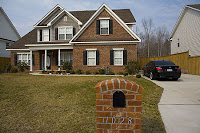
Harlow and Joe's House (Redux II)

Harlow Cuadra and Joseph Kerekes' House

So, Harlow Cuadra and Joseph Kerekes list their house on August 18, 2007 for $679k. It doesn't sell for a couple of weeks. Then, around September 3, the agent must have said: "You need a reduction! That gets a potential buyer's attention every time!" So what did the guys do? Raise the price of course! Probably so that they could later lower it back to $679k and advertise it as: "price reduced".

Asking Price Increase: 09/03/07 -- $679,000 to $699,000

1028 Stratem Court Listing

Well, it certainly got my attention... guess we'll see what happens.

- PC